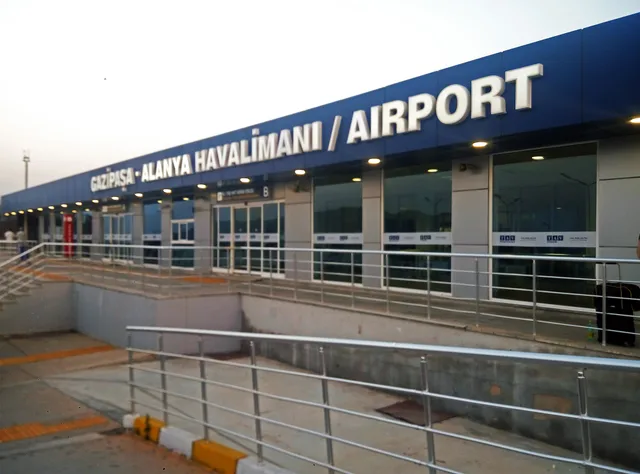
Car rental at Gazipasa-Alanya Airport
Arrange Gazipasa airport car rental with clear pickup plans. Vrenty Car explains flight details, vehicle checks, the drive to Alanya and airport returns.
Read guide Photo: Dosseman · CC BY-SA 4.0
Availability, deposits and collection locations depend on the selected offer. Check the final terms before booking.
Vrenty Car is an independent affiliate website. Bookings are handled through Localrent and the rental supplier.
Open LocalrentArrange Gazipasa airport car rental with clear pickup plans. Vrenty Car explains flight details, vehicle checks, the drive to Alanya and airport returns.
Read guide
Plan the drive from Antalya Airport to Alanya with Vrenty Car: compare transfer options, arrange pickup, choose a suitable car and leave time for return.
Read guide
Understand no-deposit car rental in Alanya with Vrenty Car. Check payment methods, insurance responsibilities and the full offer before making a reservation.
Read guideCompare luxury car rental in Alanya with Vrenty Car. Assess model promises, comfort, luggage, payment conditions, hotel access and airport handover details.
Read guidePlan parking in Alanya with Vrenty Car: check hotel access, read local signs, choose practical spaces and prepare for beach visits, day trips and returns.
Read guide
Plan an Alanya to Sapadere Canyon rental-car trip with Vrenty Car: choose a suitable route, check access, prepare for parking and leave time for the return.
Read guide
Plan a rental-car visit to Dim Cave and the Dimcayi area with Vrenty Car. Check distinct destinations, approach roads, parking, walking access and return plans.
Read guide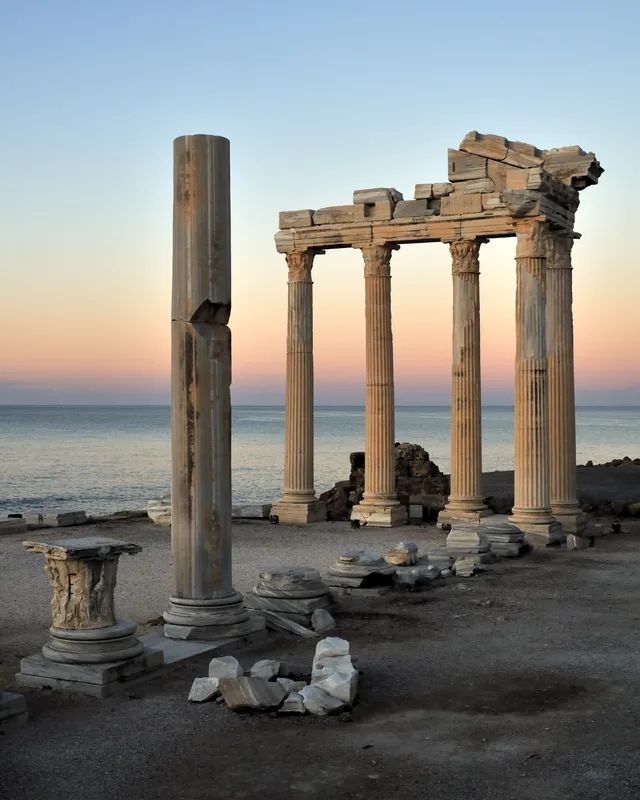
Plan an Alanya to Side road trip with Vrenty Car. Allow for the coastal drive, visitor parking, walking time, rental mileage and a comfortable return journey.
Read guideFind a car that fits your Alanya stay with Vrenty Car, an independent affiliate comparison and travel information site. Check available offers through Localrent, then confirm the vehicle, collection arrangements and rental conditions before booking.
A rental car can make an Alanya holiday more flexible, but the best arrangement depends on how you intend to spend your days. A couple staying within walking distance of the beach may only need a car for two excursions. A family staying farther from the centre may value having one throughout the holiday. Before comparing vehicles, write down the journeys that are difficult without a car: arrival, shopping, visits outside town and the return to the airport. That small exercise helps you choose rental dates with a purpose.
A search for Alanya does not by itself establish airport collection. Gazipasa-Alanya Airport, identified by GZP, and Antalya Airport, identified by AYT, are different locations with different journeys to your accommodation. The airport name on your flight confirmation should match the collection location in the booking. An attractive city offer becomes much less useful if you arrive at another airport and have not arranged the transfer needed to reach it. Read the location field as carefully as the vehicle description.
Airport collection can combine arrival transport with the start of the rental, provided the supplier accepts your flight and collection time. Hotel delivery can be convenient after a late arrival, provided it is offered at your exact address. An office appointment may suit travellers already settled in town. None of these arrangements should be inferred from a photograph, an airport article or a general location label. Ask where the handover takes place, how to recognise the representative and whether any transfer between the arrival area and the vehicle is involved.
Start with usable space, not a class label. Count every person, every large suitcase and anything awkward to load, such as a pushchair, mobility aid or sports bag. A vehicle advertised with five seats may not carry five adults and all their holiday luggage comfortably. Boot capacity, rear seat width and the position of child seats can matter more than the apparent size of the body. Ask for practical luggage information when the listing leaves room for doubt, particularly if folding a rear seat would remove a seat you need.
Transmission is another decision to make early. Choose a type you can operate comfortably in slow traffic, on gradients and when parking. If an automatic is essential, treat it as a booking requirement rather than a preference that can be traded away at collection. For any specific feature, such as air conditioning, a particular seat arrangement or luggage space, check the offer and seek confirmation if it affects whether the trip is workable. Illustrative vehicle images cannot establish the equipment of the car supplied.
The useful comparison is the total for the same journey, dates and requirements. Enter the actual collection and return times, then look at the full calculation for each offer. Check whether the quoted amount includes the arrangements you selected, such as delivery, an additional driver or child seats. Keep the rental price separate from any refundable security amount. Money temporarily unavailable on a card affects your travel budget, but it is not the same category as a charge that pays for the rental.

A security deposit, an advance payment and an insurance excess answer different questions. The advance payment contributes to the reservation cost. The deposit is a security arrangement associated with the rental. An excess describes a potential share of a covered loss under the relevant terms. A car can have a small deposit and still have exclusions or other responsibilities. A no-deposit offer should therefore be assessed alongside the whole rental agreement, not treated as a promise that nothing can ever be charged.
Check payment compatibility before choosing a car. The method accepted for an online payment may differ from the method accepted for the balance or the deposit at collection. Ask whether the relevant card must be in the main driver's name and whether a particular card type is accepted for each stage. If you plan to pay cash, obtain confirmation for the specific payment concerned and ask about the accepted currency. A general mention of cash does not settle the deposit method or establish that change will be available.
Protection names can be difficult to compare because a short label does not explain every condition. Read what is included, any excess, the exclusions and the actions required after damage or theft. Questions about tyres, glass, the underside, keys and interior damage can be useful because these are practical situations a driver can picture. Ask the supplier to identify the relevant wording rather than relying on an informal reassurance that the car is fully covered. The written terms should support the explanation.
It is also important to understand who handles a claim. An arrangement that reduces the amount the supplier can charge may work differently from a separate reimbursement product under which you pay first and apply elsewhere afterwards. Do not assume they produce the same experience at the rental desk. Compare the paperwork, contact route and evidence each arrangement requires. Keep any separate insurance documents with the rental information, and establish whether the provider needs to be contacted before a repair or another expense is authorised.
The person making a reservation is not always the person who will drive. Establish the main driver first, then check the requirements for that person against the chosen offer. Age, licence history, document format and any additional documentation need to be resolved before a payment is made. If your licence has been renewed, replaced or issued in a script the supplier may not read, explain the situation accurately and ask what evidence is required. Avoid assuming that another traveller's experience applies to your documents.
Store the confirmation, agreed collection instructions and relevant supplier contact details where you can retrieve them without a reliable mobile connection. Bring the required originals; a photograph is a convenient backup rather than an assumed replacement. Share the essential itinerary with another member of the party so that one flat battery does not leave everyone without the address or booking reference. These preparations are modest, but they are especially valuable after a delayed flight or when collecting a car early in the morning.

A collection appointment is more than a key exchange. Leave enough time to compare the agreement with the booking, understand the controls and inspect the vehicle. Walk around it with the representative where practical. Record existing marks clearly, including a wider image that shows the location of a close-up. Ask for discrepancies to be entered on the inspection record before departure. Photographs help document condition, but they should accompany a clear written record rather than replace the agreed handover process.
Check the fuel level, mileage and any warning lights, and confirm the correct fuel or charging requirements. Try the lights, wipers, mirrors and climate controls before joining traffic. Learn how to open the fuel flap and boot, operate the parking brake and select reverse. In an unfamiliar automatic, take a moment to understand the selector and the car's behaviour at low speed. If something appears faulty or unsuitable, raise it before leaving; a hurried departure can turn a solvable collection issue into a complicated roadside conversation.
Choose an uncomplicated first destination, usually your accommodation or a planned rest stop. Set the route while stationary and check that it leads to the right entrance. A navigation pin may point to the centre of a property rather than its vehicle access. Keep the first journey free of unnecessary errands so that the driver can become familiar with the car and surrounding traffic. If the route becomes confusing, continue to a safe place to stop rather than making a sudden turn to rescue a missed instruction.
Before reserving a car for the entire stay, ask your accommodation what parking actually means there. A guaranteed space, a shared courtyard and public parking somewhere nearby are different arrangements. Clarify the location, access hours, any separate charge and whether you need to leave the keys. If the entrance is narrow or steep, ask for a description that helps you judge suitability for the vehicle. An appealing room rate can lose its advantage when daily parking becomes inconvenient.
For sightseeing, identify a sensible parking option before setting out and keep a second option in mind. The closest map pin to an attraction may be a pedestrian entrance, a service lane or a road without a lawful stopping place. Read signs and instructions on arrival, because temporary restrictions and local arrangements can change. Do not infer permission from other cars being present or from an online photograph. Where payment is required, establish the charging basis and keep the receipt until you have left.
Dim Cave and the Dimcayi area can be considered together, but they should not be treated as one interchangeable destination. Select the actual cave entrance, restaurant or riverside place you want to visit, then examine the connecting road and parking arrangement. A short distance between pins may still involve turns, gradients and access decisions. For Side, allow for the longer journey, time out of the car and parking outside the area you want to explore. Resist combining every nearby attraction into one crowded day.
Mileage limits, geographical restrictions and permitted road surfaces belong in the planning stage. If an offer has a distance allowance, include the journey back to the return point as well as the sightseeing legs. Leave room for ordinary detours, shopping and refuelling rather than planning to finish exactly at the limit. Keep the final rental day comparatively simple, especially when returning at an airport. A pleasant holiday route should not depend on every junction, parking search and handover happening without delay.
Follow the agreed fuel arrangement and keep the final fuel receipt when relevant. Remove belongings from the door pockets, boot, seat gaps and phone holder, then check that all supplied accessories are present. Photograph the condition and fuel display at return, and ask for a record of any new issue discussed. If a charge is proposed, request the reason and supporting calculation. Calm, specific questions and dated records are more useful than trying to reconstruct the entire rental from memory later.
Vrenty Car provides comparison context and practical reading; Localrent is the booking partner, and the selected rental company handles the car and the rental agreement. Use the contact details in your booking for handover and vehicle questions, and Localrent's official contact page for booking assistance. Keeping those roles clear helps a request reach the organisation able to resolve it. A successful rental ends with the car returned as agreed, payments understood and enough documentation to answer any follow-up without guesswork.
Work through the whole journey for each one. For an office collection, include the transport needed to reach that office and the time spent getting there. For delivery, establish the exact address, appointment and any charge. For an airport option, include the confirmed handover procedure and the return journey to departures. Then compare those complete arrangements against the same rental dates and equipment needs. The most useful choice may be the one that saves an awkward transfer or fits your hotel parking, even when its daily figure is not the smallest. Keep convenience specific: a written delivery appointment is valuable, while an unconfirmed promise to arrange something later should not be treated as an included service.
Not necessarily. Compare the days when a car solves a real transport need with the days you expect to stay close to your accommodation. A shorter rental can work well for planned excursions, while a continuous booking can reduce repeated handovers. Include parking, delivery and the time needed for collection in that comparison.
Do not assume it does. Check the selected pickup location and the airport code on your flight booking. GZP and AYT are different airports. An offer must explicitly support the airport, date and time you need, and any delivery or different-location return should appear in the agreed arrangements.
Look for an offer whose written conditions match your needs, then check the balance payment and security arrangements separately. Availability varies. No deposit does not mean no damage responsibility, and acceptance of one payment method during online booking does not establish what is accepted at collection.
Choose according to passengers, luggage, permitted roads and driver confidence. A larger vehicle is not automatically needed, and an SUV label does not authorise off-road driving. Ask about suitability for a named route when uncertain, then check current access and road conditions before leaving.
Use the supplier details in your confirmation for the meeting point, vehicle, handover and return. Use Localrent's official contact page for booking assistance. Have the reference, dates and a concise description ready. Vrenty Car does not operate a rental desk or hold the supplier's live vehicle allocation.
Confirm the main driver's eligibility, exact locations and times, full cost, payment methods, security, protection conditions and any essential equipment. Resolve requirements that could prevent collection before paying. Save the terms and confirmation for the offer you actually choose, because general destination advice cannot replace those documents.